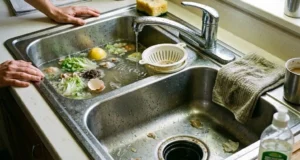
A kitchen sink is arguably the most hard-working fixture in any home. It’s where the morning coffee begins and where the dinner cleanup ends. But because we use it so frequently, we often take its complex plumbing for granted—right up until the moment you open the cabinet doors and find a puddle.
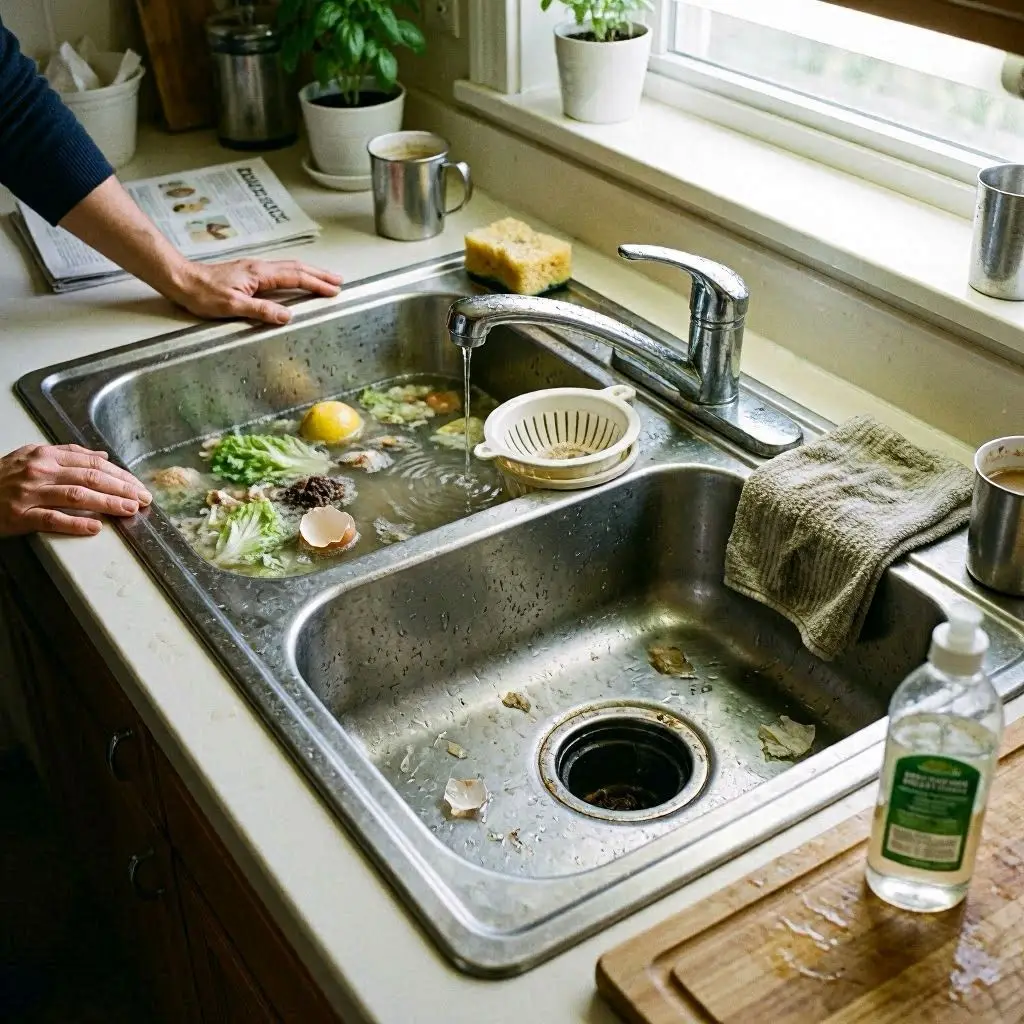
When you’re staring at water damage under your sink, the culprit is usually one of two things: a localized sink flange leak or a more complex case of garbage disposal leaking. Ignoring these drips is a recipe for disaster, as stagnant water quickly rots the base of your cabinetry and invites toxic mold into your kitchen.
Before you call a plumber for a three-figure service fee, it’s worth taking a closer look. Most under-sink moisture issues are preventable and fixable with a little bit of “native” DIY knowledge. Here is the definitive guide to diagnosing, repairing, and preventing the most common kitchen plumbing failures.
The Hidden Culprit: Diagnosing a Sink Flange Leak
The most common source of mystery moisture under the kitchen sink isn’t actually a broken pipe—it’s a failed seal at the very top of the drainage system. This is known as a sink flange leak.
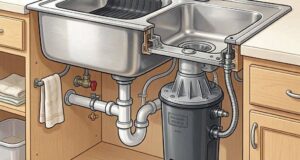
The sink flange is the metal ring that sits inside your sink’s drain hole. It is held in place by a mounting assembly underneath and is sealed to the sink basin using a thick ring of plumber’s putty. Because a garbage disposal vibrates intensely every time it runs, that metal flange is under constant structural stress. Over time, the putty dries out, cracks, or the mounting bolts vibrate just loose enough to let water seep through the gap.
How to Identify a Sink Flange Leak
If you see water dripping down the outer shell of your disposal unit, starting from the very top where it meets the sink, you have a flange issue. To confirm, plug the sink, fill it with a few inches of water, and then pull the plug. Watch the junction between the metal flange and the sink basin with a flashlight. If water beads up immediately, the seal is blown.
The Fix
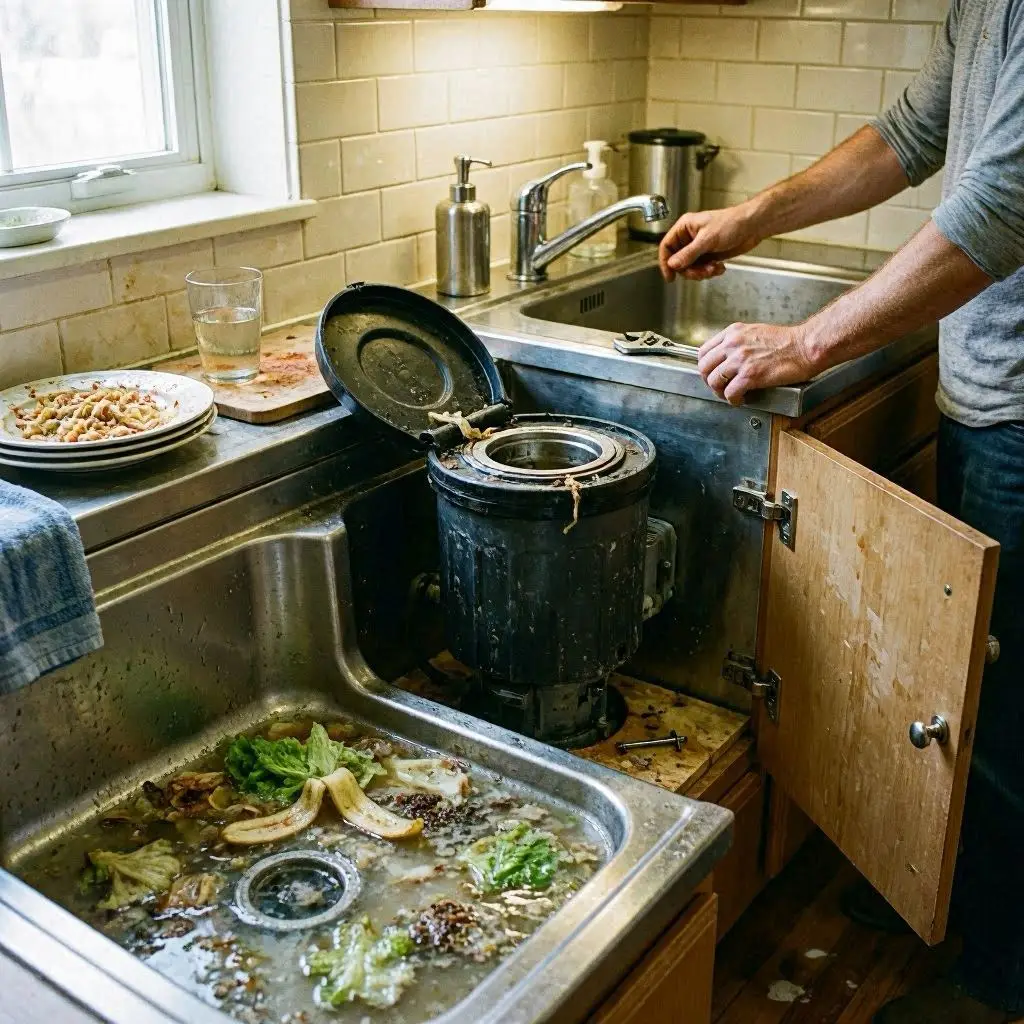
To repair a sink flange leak, you must detach the disposal and loosen the mounting assembly. You’ll need to scrape away every bit of the old, brittle putty and apply a fresh, generous bead of new plumber’s putty. Re-seating the flange and tightening the bolts evenly is the only way to ensure a watertight bond that can withstand the motor’s vibration.
Dealing with a Garbage Disposal Leaking from the Bottom
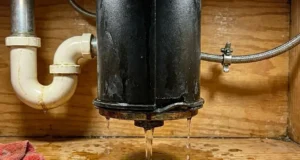
If your inspection reveals that the water isn’t coming from the top flange, but is instead weeping directly out of the metal rivets or electrical ventilation holes at the very base, you are dealing with a more serious garbage disposal leaking problem.
Internal leaks usually mean the mechanical seals inside the motor housing have perished. This is often caused by age, but it can be accelerated by poor kitchen habits.
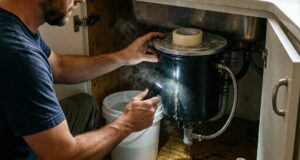
Critical Safety Note: If your unit is leaking from the bottom, water is likely entering the electrical compartment. This is a significant shock hazard. Unplug the unit immediately and do not attempt to “patch” the motor housing with sealant; a bottom-casing leak almost always requires a full unit replacement.
Safe Food Items: The “Hidden” Killers of Your Disposal
We often assume that if it’s soft enough for us to eat, the disposal can handle it. This is a dangerous misconception that leads directly to clogs and backpressure leaks.
One of the most dangerous items you can put down your drain is potato peels. While they seem harmless, the chemical composition of a potato is highly starchy. When these peels are ground up and hit with water, they transform into a thick, glutenous paste—almost like a heavy wood glue. This paste doesn’t just clog the pipes; it can coat the internal seals of the machine, causing the motor to bind and eventually creating a permanent garbage disposal leaking situation as the seals are forced out of alignment.
High-Risk Items to Avoid:
- Starchy Scraps: Pasta, rice, and potato skins (they expand and turn into glue).
- Fibrous Strings: Celery, onion skins, and corn husks (they wrap around the blades like hair).
- Grease and Fats: These solidify in the cold pipes and create “fatbergs” that cause water to back up into the disposal housing.
Prevention: Simple Upgrades for a Healthy Drain
Maintenance is significantly cheaper than repair. If you want to avoid the mess of a garbage disposal leaking in the future, start with these two affordable additions to your routine:
1. Filtered Drain Covers
Hair and small food scraps are the primary architects of a slow-draining sink. Installing a fine-mesh filtered drain cover is a “pocket change” investment that saves you hundreds in professional rooter services. By catching debris before it enters the disposal or the P-trap, you prevent the clogs that create the hydraulic pressure responsible for many leaks.
2. The Toothbrush Technique
Cleanliness helps you spot problems early. To remove the gunk and “biofilm” that accumulates under the edges of your faucet and flange, skip the harsh abrasive chemicals. Many industrial cleaners can actually corrode the metal finish or eat away at the rubber gaskets, leading to a premature sink flange leak. Instead, use an old toothbrush dipped in hot water and a little vinegar. It’s gentle enough to preserve your hardware but effective enough to keep the seals clean.
Managing Household “Plumbing Emergencies”
Plumbing awareness should extend to every member of the family, especially the younger ones.
- The Toilet Shut-Off: Teach children how to turn the silver oval valve behind the toilet clockwise. If they accidentally flush too much paper, knowing how to kill the water supply before the bowl overflows can save your bathroom carpet from a biohazard disaster.
- The “Wall Photo” Rule: If you ever need to drill into a wall or ceiling for a home project, start with a small “pilot” hole. Stick your smartphone through and take a flash photo in every direction. This simple step ensures you don’t accidentally puncture a high-pressure water line or a vent stack, turning a simple DIY task into a flooded nightmare.
- Sewer Odors: If you smell a persistent “rotten egg” scent or a foul swampy odor coming from your pipes, don’t ignore it. This often indicates a sewer backup or a dried-out P-trap. Breathing in sewer gas is hazardous to your health and often precedes a major pipe failure.
Whether you’re tightening a mounting bolt to stop a sink flange leak or investigating a garbage disposal leaking from the base, the key is to act quickly. Water damage is cumulative; the longer you wait, the more expensive the “collateral damage” becomes.
Keep your disposal clear of starches, run plenty of cold water during every use, and perform a “dry towel test” under your sink once a month. By staying proactive and getting your information from reliable, practical sources, you can keep your kitchen plumbing running perfectly for years to come.