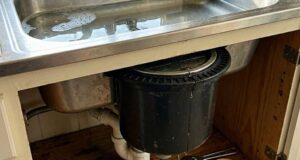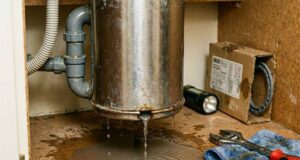
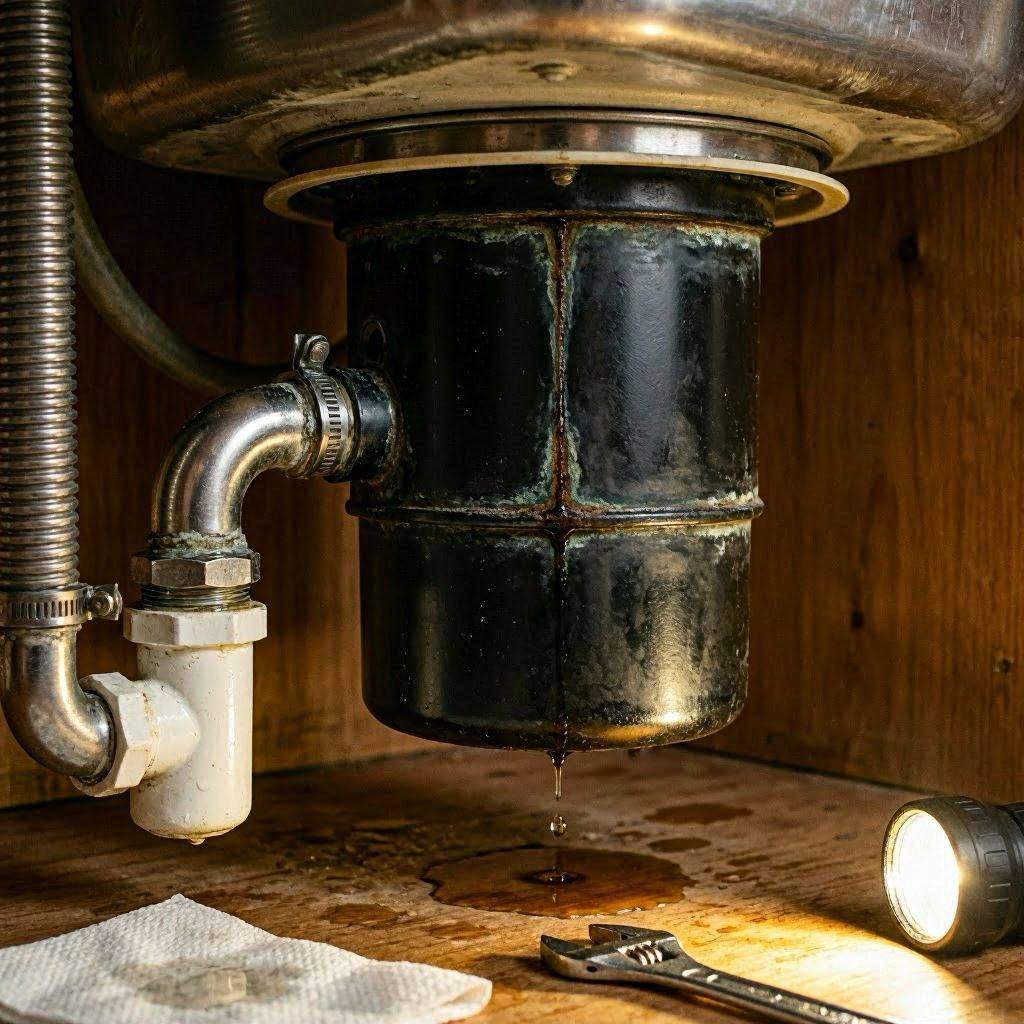
Finding a pool of water under your kitchen sink is incredibly frustrating. When you look closer and realize the drops are forming directly on the base of your appliance, it raises immediate red flags. A garbage disposal leaking from its lowest point is a distinct plumbing issue that behaves very differently from a simple loose pipe under the counter.
1. The Diagnosis of a Bottom Leak
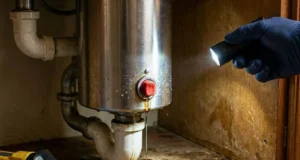
When you observe water dripping from the very bottom cover or through the electrical reset button area, it indicates an internal problem. Unlike top or side leaks that stem from external connection points, a bottom-focused drip confirms that water has successfully breached the protective outer shell of the unit.
2. The Internal Main Seal Failure
The most frequent catalyst for a garbage disposal leaking from the base is the deterioration of the internal flywheel seal. This specific rubber gasket sits directly beneath the spinning impeller plate and above the electric motor. Over years of handling friction and water pressure, this seal hardens, cracks, and permits water to slip straight past the mechanical assembly.
3. The Danger of Motor Exposure
Because the electric motor sits directly beneath the grinding chamber, an internal seal failure means water drips right through the electrical windings. Once water enters this section, it causes short circuits, destroys the motor insulation, and completely ruins the electrical integrity of the appliance.
4. Why the Reset Button Drips
Many homeowners notice water specifically pooling around the red overload reset button at the base. This happens because the reset button housing creates a natural physical opening in the bottom metal plate. Water tracking downward inside the motor housing takes the path of least resistance, utilizing this button cavity as an exit point.
5. Gravity Can Deceive You
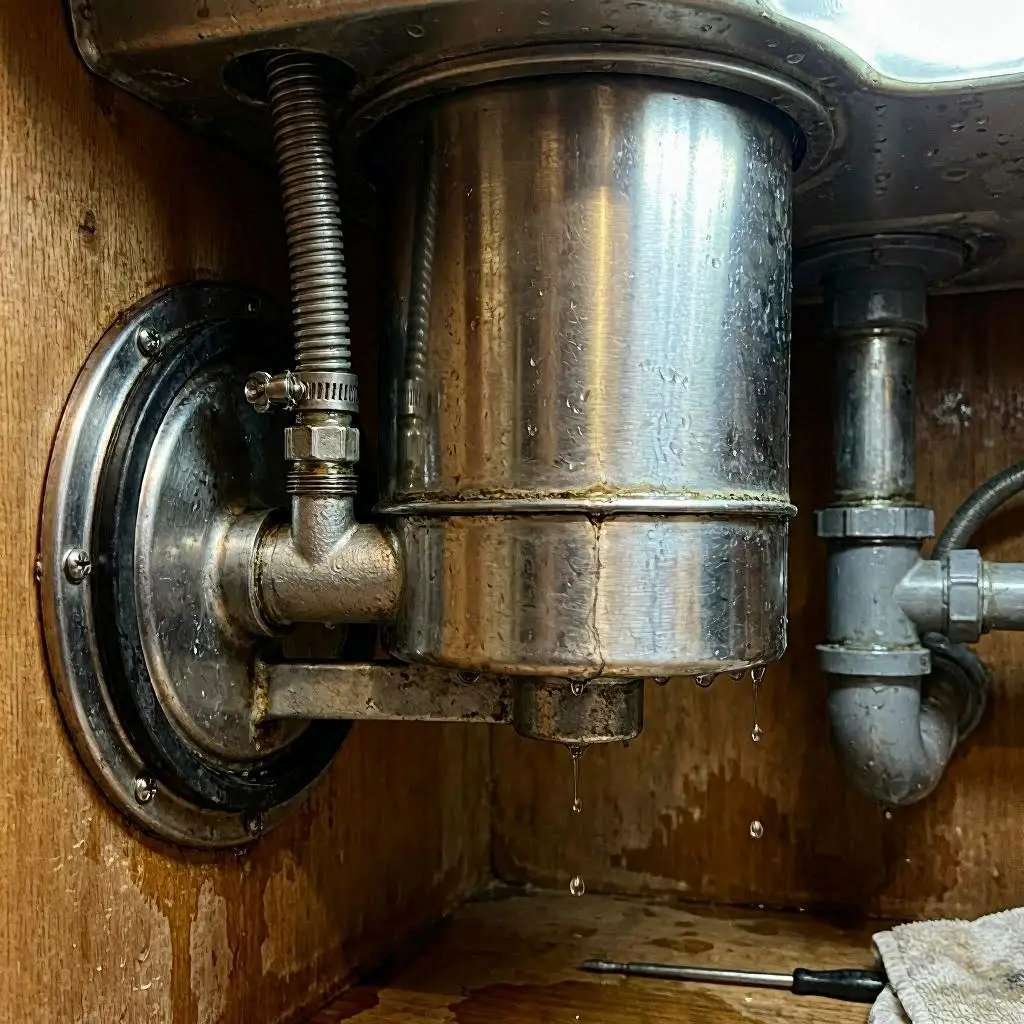
Before jumping to conclusions, you must rule out tracking. Water originating from a loose sink flange or a faulty dishwasher drainage connection above can run down the exterior body of the machine and pool at the bottom, mimicking an internal failure. Wipe the entire unit dry, run the water, and watch closely with a flashlight to ensure the water is actually coming from inside the bottom shell.
6. Chemical Corrosives Under estimate Damage
Using harsh, caustic chemical drain cleaners down your sink can fast-track a garbage disposal leaking scenario. These severe chemicals generate high heat and introduce highly corrosive elements that eat away at internal rubber seals and thin metal components, causing premature internal structural failure.
7. The Age Factor of the Appliance
Garbage disposals are not designed to last forever. Most standard units carry a reliable lifespan of roughly 5 to 10 years. As the machine approaches its upper age limits, the internal components naturally degrade due to thousands of operational vibrations and constant moisture exposure.
8. Mechanical Vibrations and Structural Hairlines
The immense torque and high RPMs required to grind food waste generate constant micro-vibrations. Over long periods, these vibrations can cause subtle micro-fractures in the inner plastic lining or metal casing of the grinding chamber, allowing water to weep through to the electrical compartment below.
9. Hard Water and Mineral Scaling
Areas with exceptionally high mineral content or hard water experience scale buildup inside the disposal chamber. This rough calcium buildup rubs continuously against moving parts, acting like sandpaper on the rubber seals until the watertight barrier completely fails.
10. The Risk of Electrical Shock
Operating a machine with an active bottom leak is an immediate safety hazard. Because water is moving directly through the electrical housing, touching the unit or running it while wet can result in a dangerous electrical short or shock. Always cut power at the breaker panel before inspecting a bottom leak closely.
11. Why Simple Patching Does Not Work
Attempting to seal a bottom leak by applying waterproof silicone, epoxy, or heavy-duty tape to the outside plastic housing or reset button area is completely ineffective.
12. Impact of Foreign Object Collisions
Accidentally dropping hard metal objects like spoons, jewelry, or heavy bone fragments into the disposal can create severe internal stress. When the spinning impeller forces these objects against the chamber walls at high speeds, the physical impact can dislodge or misalign the delicate internal shaft seal.
13. The Dishwasher Knockout Plug Nuance
If you recently installed a new unit and notice immediate leaking issues, verify the dishwasher connection status. While a loose dishwasher bypass pipe causes a side leak, a severe backup from an unremoved knockout plug can over-pressurize the chamber, stressing seals and pushing water through unexpected pathways.
14. Thermal Expansion and Contraction Cycles
Pouring boiling water down the drain immediately followed by freezing ice cubes causes rapid thermal shifts. This constant expansion and contraction cycles the internal plastic and rubber components severely, creating small gaps in the mechanical seal fitment over time.
15. The Professional Verdict: Replacement Over Repair
When a garbage disposal leaking problem is definitively traced back to an internal seal or motor housing breach, repairing the individual seal is rarely cost-effective or safe. Manufacturers do not sell internal motor seals as separate consumer-replaceable parts, meaning a complete replacement of the unit is almost always mandatory.
16. Selecting a Corrosion-Resistant Unit
When buying a replacement unit to prevent future bottom leaks, look closely at the interior material specs. Opt for models featuring stainless steel grind components and a glass-filled nylon grinding chamber. These materials drastically lower the chances of structural corrosion or cracking.
17. Warranty Evaluation Before Disposal
Before purchasing a new appliance out of pocket, check your documentation. Premium garbage disposals often come with long-term mechanical warranties ranging from 5 to 12 years. If your bottom leak occurs within this window, the manufacturer will typically provide a complete replacement unit at no cost.
18. Temporary Mitigations and Water Damage Control
While you wait to install a replacement unit, place a dedicated plastic basin or bucket directly beneath the failing disposal. Turn off the dedicated under-sink electrical outlet or switch off the breaker to prevent accidental activation and protect your kitchen cabinetry from warping.
19. DIY vs. Professional Installation
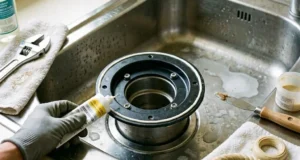
Replacing a failed unit is a manageable weekend project for a handy homeowner. However, if the old plumbing line requires alterations, or if you feel uncomfortable handling electrical wire connections and tight mounting ring assemblies, hiring a licensed plumber ensures a watertight installation.
20. Essential Preventive Practices for Your New Unit
To ensure your new garbage disposal avoids internal seal blowouts, adopt better habits: always run plenty of cold water during and after every grind cycle to flush debris completely, avoid grinding highly fibrous or rock-hard items, and never dump chemical plumbing agents directly down the unit.
Critical Safety Warning: If you notice smoke, sparks, or a persistent humming noise coming from a unit that is actively dripping water from its base, keep your hands clear. Cut the power immediately at your home’s main circuit breaker panel to eliminate any risk of electrical fire or injury.